
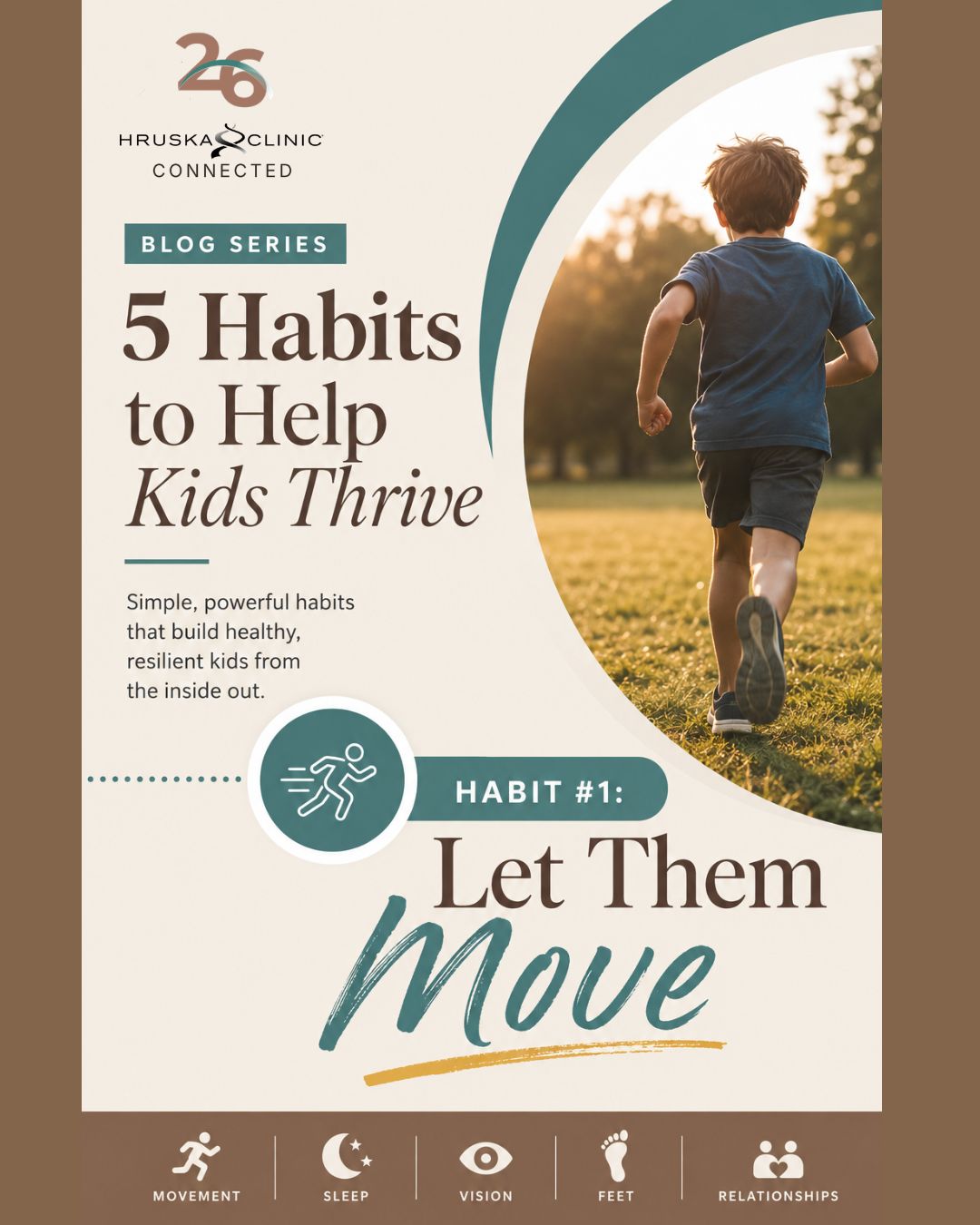
Habit #1: Let Them Move
Kids are growing up in a very different world than we did.
So much of life has become easier and more convenient. We can communicate with someone across the country without leaving the couch, entertain ourselves for hours with a screen, and accomplish things that once required us to get up and move around.
Technology isn’t the problem. But it does mean that movement no longer happens automatically.
That makes one simple habit especially important for growing kids:
Let them move.
And we don’t necessarily mean “exercise.”
Kids don’t need every movement experience to be organized, measured, or part of a training program. They need opportunities to run, jump, climb, balance, throw, swim, ride a bike, dance, wrestle, play, explore, and figure things out with their bodies.
That’s how kids learn to move.
Movement is about more than muscles
When a child climbs over something, jumps off something, catches a ball, rides a bike, or navigates a playground, they’re doing more than building strength and endurance.
They’re learning where their body is in space.
They’re adjusting to their environment.
They’re solving problems.
They’re coordinating what they see with how they move.
They’re learning what they can do — and what they can’t do yet.
Movement gives the developing brain opportunities to interact with the world in ways that simply sitting and watching cannot.
And movement isn’t just physical or cognitive. It’s social and emotional, too.
Playing with other kids requires communication, cooperation, patience, problem-solving, and sometimes learning how to lose. Active play gives kids opportunities to take risks, experience success, deal with frustration, and build confidence.
So what can parents actually do?
You don’t need to add another activity to an already busy family schedule.
Instead, look for ways to make movement part of normal life.
Send them outside.
Let them play at the park.
Go for a family walk or hike.
Play catch.
Give them opportunities to climb, carry, balance, build, explore, and play.
And sometimes, the best thing we can do is simply get out of the way and let kids play.
They don’t need us to design every movement experience for them.
They need opportunities to experience their bodies and their environment.
Helping kids thrive isn’t about doing everything perfectly
There will be plenty of screen time. There will be days when everyone is tired. There will be rainy days, busy days, and days when the easiest thing to do is sit on the couch.
That’s okay.
The goal isn’t to eliminate technology or make childhood perfectly “healthy.” It’s to create a balance that gives kids plenty of opportunities to move, play, rest, learn, and connect with other people.
Kids are growing. Their bodies are changing. Their brains are developing.
One of the simplest things we can give them is the opportunity to move.
So maybe this week, don’t add another thing to your child’s schedule.
Just ask yourself:
“How can I give my kid a little more opportunity to move?”
That might be enough.
Recent Comments